

Natural Dyes, Biodiversity & Textile Heritage
Exploring the relationship between Armenia’s natural environment, traditional color-making, and living textile craftsmanship.
For centuries, the colors of Armenian textiles have been closely connected to the natural world. Plants, roots, leaves, flowers, and other natural materials provided dyers with a remarkable range of colors, while generations of artisans developed the knowledge needed to transform those materials into lasting textile traditions.
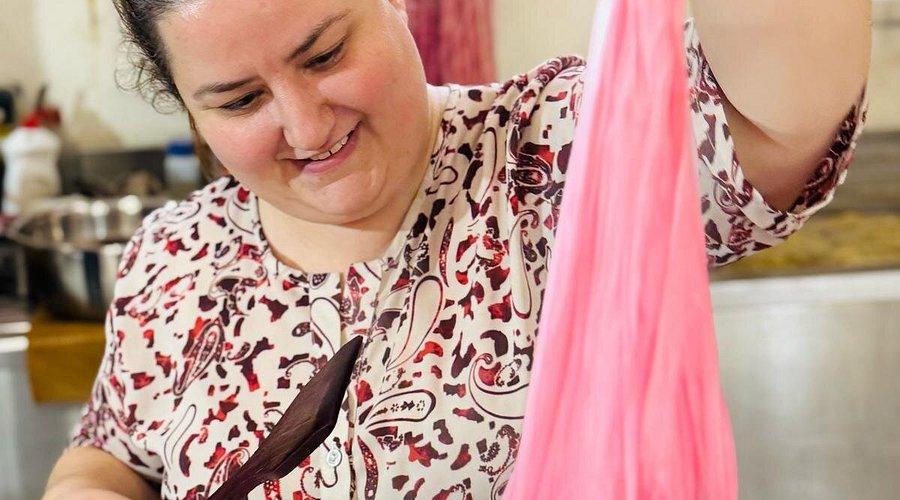
At Woolway Studios, we believe this knowledge deserves to be preserved, studied, practiced, and shared.
Living Color Armenia is our developing educational and research initiative connecting traditional natural dyeing, Armenian biodiversity, textile conservation, and cultural heritage.
Where Nature Meets Craftsmanship
Traditional dyeing is more than a method of producing color. It brings together botanical knowledge, chemistry, craftsmanship, observation, and experience.
The results depend on many factors: the dye material, its preparation, the type of fiber, water quality, mordants, temperature, and the dyer’s skill.
Through Woolway Studios, we aim to explore these relationships by combining practical dyeing experience with historical research and opportunities for scientific collaboration.
Our interests include historically significant natural dye materials associated with Armenian textile traditions, such as:
- Madder (Rubia tinctorum) — traditionally valued for its range of reds, oranges, and warm tones.
- Weld (Reseda luteola), known as Esparak — an important source of yellow dyes.
- Armenian cochineal (Porphyrophora hamelii), known as vordan karmir — a historically significant Armenian red dye source obtained from an insect rather than a plant.
- Indigo-bearing dye materials — important to the study of historical blue dyeing and the broader color traditions of regional textiles. Their botanical origins and historical trade routes require careful distinction.
We approach these materials with respect for both historical evidence and ecological responsibility. Their documented uses, geographic histories, and conservation needs require careful research.
Connecting Traditional Knowledge with Scientific Research
Artisans often preserve knowledge through practice, observation, and experience. Researchers contribute botanical identification, historical documentation, analytical methods, and scientific interpretation.
We believe these perspectives can strengthen one another.
Through Living Color Armenia, we hope to encourage collaboration around:
- Identifying plants and other natural dye sources associated with Armenian textile traditions.
- Documenting historical dyeing methods and artisan knowledge.
- Exploring the relationship between dye materials, fibers, and color.
- Studying the ecological context and conservation needs of relevant species.
- Developing responsible approaches to sourcing and using natural materials.
- Creating educational resources for students, artisans, researchers, and visitors.
Our objective is not to present traditional knowledge as a substitute for science, but to create meaningful dialogue between practical experience and scientific investigation.
Preserving Living Textile Heritage
A traditional textile carries more than its visible patterns and colors.
It reflects the knowledge of people who selected fibers, prepared materials, developed colors, designed patterns, and worked patiently at the loom.
Much of this knowledge has historically been passed from one generation to another through observation and hands-on learning.
Woolway Studios works to support the continuity of these traditions through weaving, natural-dye activities, textile conservation, workshops, and educational experiences.
We are particularly interested in documenting knowledge that might otherwise disappear as experienced artisans grow older and traditional practices become less common.
Biodiversity and Responsibility
Natural dyes connect craftsmanship directly with the environment.
Their continued study raises important questions about biodiversity, plant habitats, sustainable harvesting, cultivation, and the protection of vulnerable species.
We believe that renewed interest in natural dyes must be accompanied by environmental responsibility.
For this reason, Living Color Armenia seeks to encourage research-informed practices that respect the natural resources on which traditional craftsmanship depends.
Historical significance does not automatically justify harvesting a plant or organism today.
Education and Cultural Exchange
We envision Living Color Armenia as a foundation for practical learning and professional exchange.
Potential activities include natural-dye demonstrations, artisan workshops, research visits, educational presentations, documentation projects, and conversations between traditional craftspeople and scientific specialists.
We hope these activities will contribute to a better understanding of Armenian textile heritage while creating opportunities for local artisans and younger generations.
An Invitation to Collaborate
Woolway Studios welcomes conversations with botanists, researchers, textile conservators, museums, universities, cultural institutions, educators, and organizations working in biodiversity and heritage preservation.
We are particularly interested in modest, clearly defined collaborations that connect scientific research with practical craftsmanship and produce useful educational or documentary outcomes.
Possible starting points include botanical identification, historical dye-source documentation, small research exchanges, and jointly developed educational activities.
We believe meaningful partnerships begin with shared curiosity, mutual respect, and a willingness to learn from one another.
About Woolway Studios
Woolway Studios is a developing center for traditional textile craftsmanship, natural dyes, weaving, conservation, education, and cultural experiences in Armenia.
Founded by Hayk Oltaci, a textile conservator and rug restoration specialist with more than forty years of professional experience, Woolway Studios seeks to preserve traditional knowledge while creating opportunities for learning, cultural exchange, and sustainable artisan livelihoods.
Our long-term goal is to help build an enduring cultural and educational institution where craftsmanship remains a living practice.
Interested in Collaborating?
We welcome inquiries from researchers, institutions, educators, and cultural organizations interested in natural dyes, biodiversity, and textile heritage.
Woolway Studios — Armenia
Website: https://woolwaystudios.blog
Instagram: https://www.instagram.com/woolway.am/
