
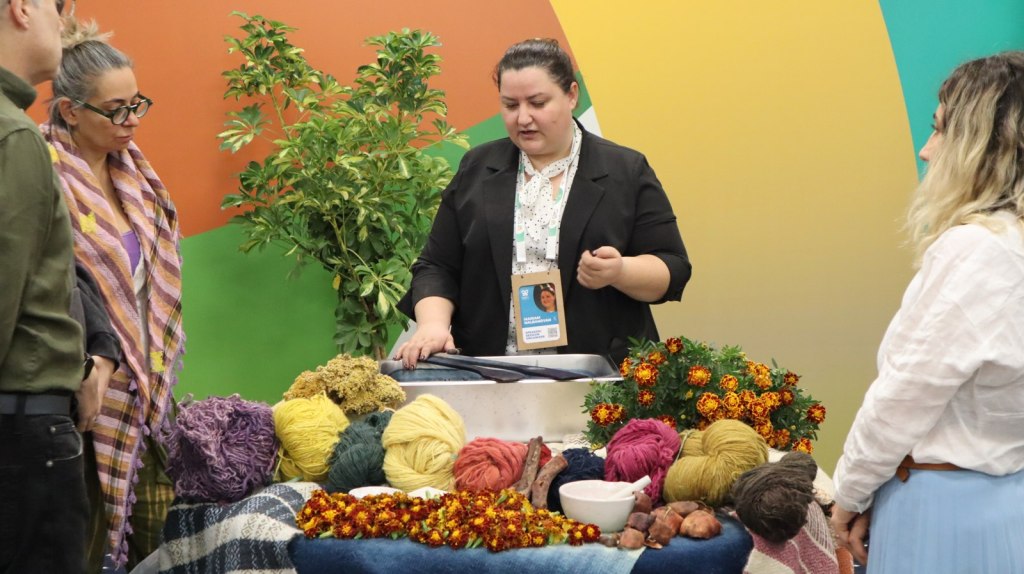
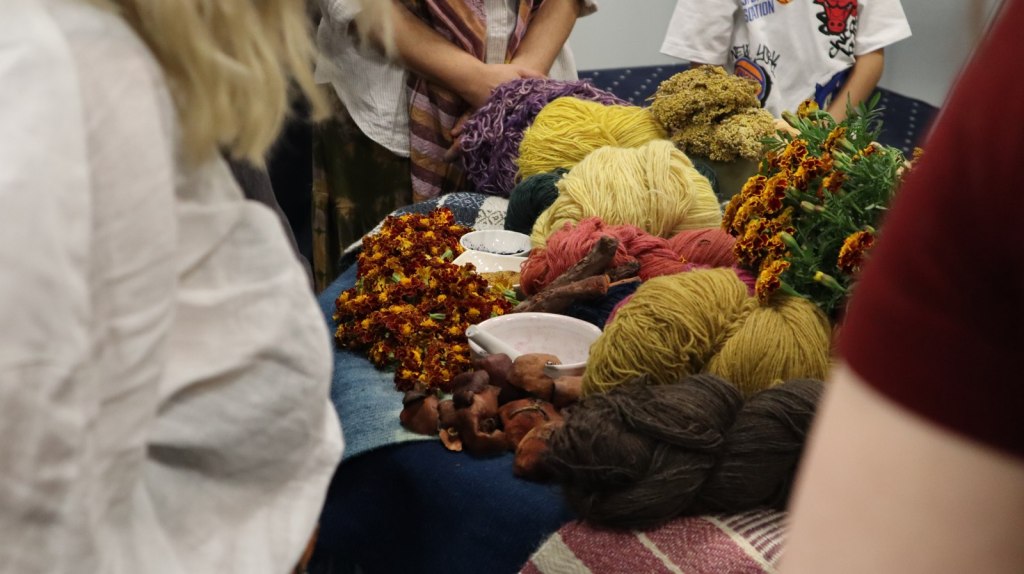
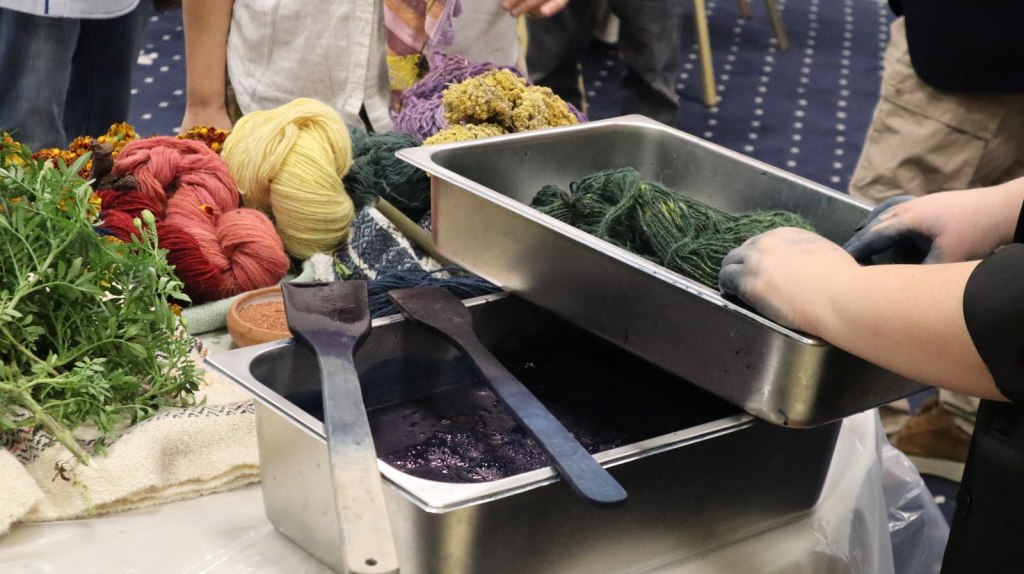
At the COP17 Green Zone in Yerevan, Mariam Nalbandyan stood beside a table of flowers, dye materials, and skeins of yellow, pink, purple, and brown yarn. One photograph catches her speaking to visitors. Another draws the eye down to a pair of hands working with green yarn in a metal tray. Together, the photographs show a stage of textile making that usually goes unseen: before a color becomes part of a carpet, someone has to make it work in wool.
That is Mariam’s work. A textile artist, natural dyer, and co-founder of Woolway Studios in Argavand, Armenia, she works with the materials and techniques of Armenian textile traditions. Her dyeing has contributed to a contemporary red carpet for a film festival and to a National Gallery exhibition that took drawings off the page and translated them into wool. In both settings, the dyer’s decisions shaped what the weavers could do next.
Working with plants and wool in Argavand
Madder root can produce warm reds and terracotta tones. Walnut husks can give deep browns; pomegranate rind can yield golds or muted olives. These are starting points, not fixed swatches. Growing conditions, the state of the dye material, and the wool itself can all influence the result. A color that works in one skein has to be considered again when several skeins sit side by side.
The ArmWool project’s dyeing record names Mariam at Woolway, where spun yarn is dyed by hand. It describes small differences from batch to batch and the practice of recording the plant source and recipe. That balance matters. A variation can give a broad patch of color depth, while a closely matched batch can keep a drawn line or repeated pattern consistent. The dyeing work calls for judgment about when to leave a variation alone and when to bring a shade closer to its neighbors.
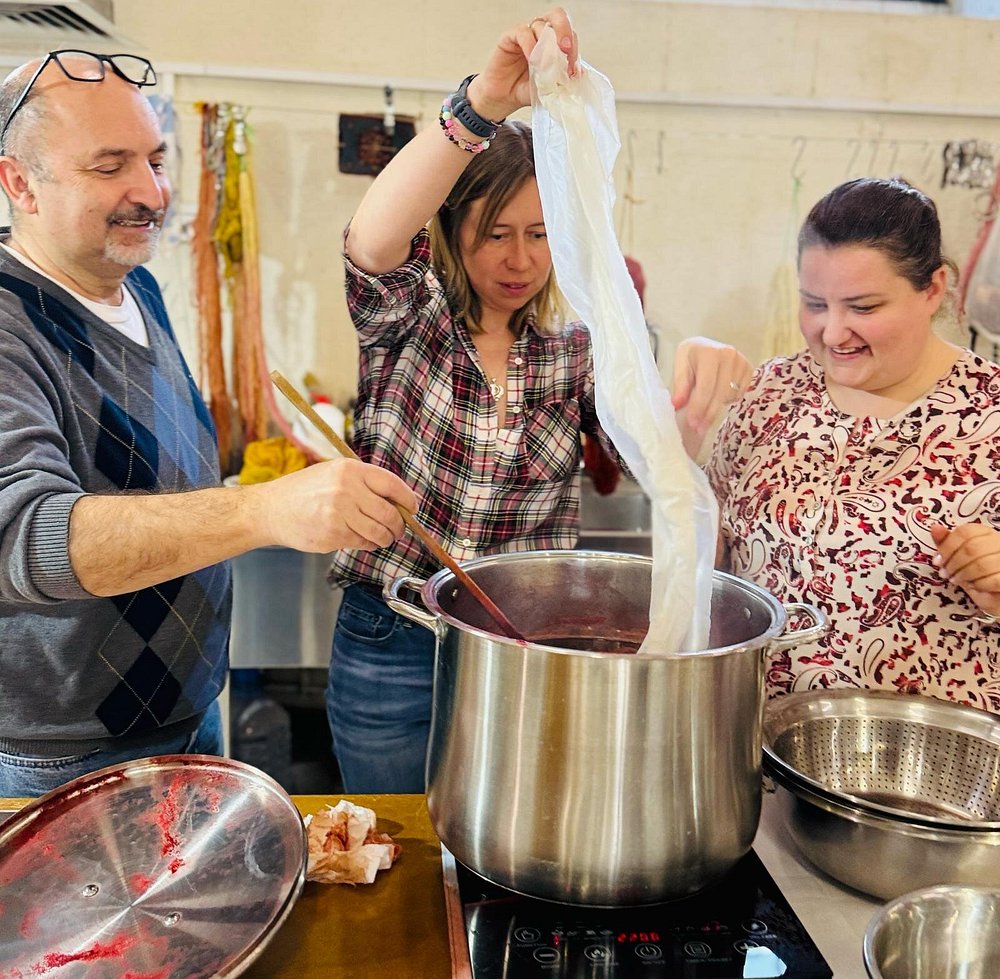
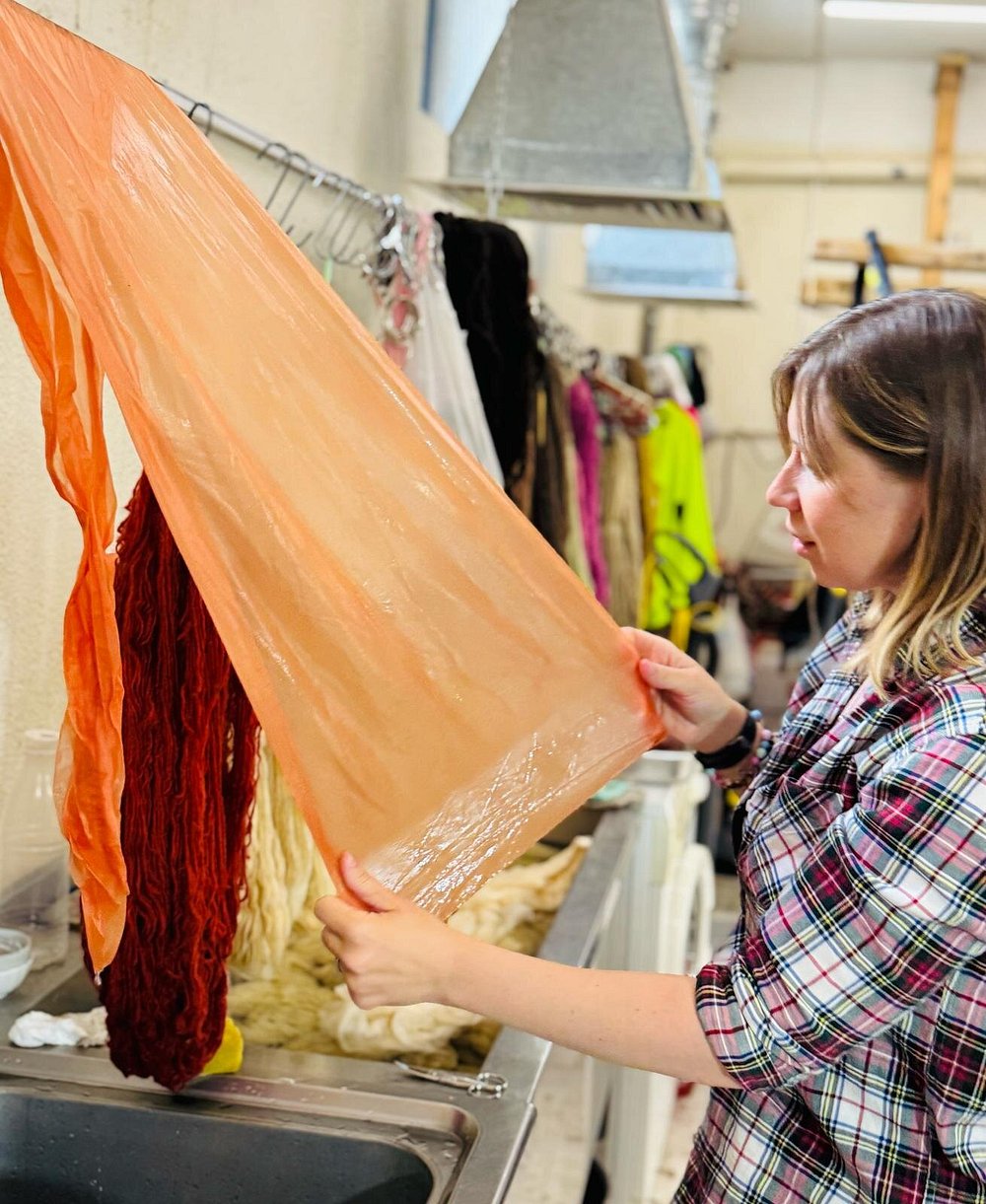
Sarah Gallagher was already familiar with indigo dyeing, but she had never dyed this much fabric before. In a series of workshops at Woolway Studios, she worked with Mariam and Woolway co-founder Hayk Oltaci to dye her own textiles on a larger scale.
Warp and Variations: A red carpet made to be walked on
For the opening of the 22nd Golden Apricot Yerevan International Film Festival in 2025, AHA Collective brought in Jean-François Dingjian and Eloi Chafaï of Normal Studio to design Warp and Variations. Curated by Nairi Khatchadourian, the eight handwoven carpets formed a red carpet about 16 meters long. AHA describes a palette that drew on cochineal, madder root, and flowers gathered in Armenia.
The project film credits Mariam as the dyer and names the weavers: Emma Hakobyan, Arevik Sargsyan, Milena Ordiyants, and Galina Ordiyants. The credits make it possible to see the work as a series of distinct contributions, from design to color to weaving. Here the carpets were also meant to be walked on. From a distance, the pieces could read together; up close, the wool and changes in color could hold a viewer’s attention.
From Darik to Meghri. ArmWool’s red-carpet records trace the wool to Armen Khechoyan’s Balbas sheep in Darik, Shirak. The fleece was prepared and spun into yarn in Amasia, then dyed by hand by Mariam Nalbandyan at Woolway Studios in Argavand. Meghri enters Woolway’s story through a separate project: Anna Boghiguian’s drawing of the southern town became the basis for a rug that Woolway dyed and Lena Arakelyan wove at the studio.
Weaving Culture: Taking color off the page
The following year, a different challenge brought dyeing into focus. For Anna Boghiguian: Weaving Culture, the National Gallery of Armenia presented Boghiguian’s drawings alongside 37 handmade carpets and tapestries. AHA collective conceived the residency that launched the project, and its founder, Nairi Khatchadourian, curated the exhibition. Six displaced weavers from Karabakh and local dyers took part in the nine-month translation from paper to carpet. For Meghri, The Earth Rises, based on Boghiguian’s 2025 drawing of the same name, Woolway Studios dyed the wool, and Lena Arakelyan wove the rug at Woolway.
CivilNet’s feature shows Boghiguian’s original drawing for Meghri, The Earth Rises, Lena Arakelyan weaving it at the loom, and the finished rug on display. Drawing on testimonials gathered by AHA collective, the feature names Mariam and Evgenya Shabazyan as the two dyers who helped translate Boghiguian’s palette into wool. A wash of color on paper can run into the next color. On a loom, the relationship has to be made with threads. A dyer helps make that translation possible by giving weavers a range of shades they can put to work. Mariam’s contribution belongs alongside the artist’s drawings, her fellow dyer’s work, and the weavers’ decisions at the loom.
Artist and conservator Liana Ghukasyan organized Yerevan: Matter, Memory and Restoration, a six-day international workshop that took participants into Armenian museums and working studios. At Woolway Studios, the group tried traditional natural dyeing and each participant dyed a scarf to take home. In her firsthand account of the visit, Sofia Annarilli describes how the program brought conservation professionals together to learn from Armenian artisans and try the techniques themselves. Ciao Armenia’s video interview with Liana offers the organizer’s perspective on the same workshop.
Natural color and The Rug Code
Woolway’s dyeing work also connects with village rug production. Kyle Khandikian, founder of The Rug Code, identifies Woolway as a natural dyeing partner in his LinkedIn post. The Voskey cover story he shared was photographed in the Woolway workshop in Argavand. The ArmWool partner roster records distinct roles for the two organizations: Woolway in dyeing and weaving, and The Rug Code in carpet-making and design.
One example of Kyle’s work in Tavush is Shulal Kids photo gallery, which shows a collection with the weavers of Telik Crafts in Ijevan. The weavers translated drawings inspired by Armenian stories and places into shulal flatweaves, making choices about color and texture as they worked. Their flatweaves show another way contemporary Armenian rug design grows out of the choices made by the people at the loom.
In Kyle’s photographs from Carpet Diem Paris, the scale of a different rug comes into view. Untitled, from The Rug Code’s Barana collection, was designed by Gohar Martirosyan and hand-knotted by Naira Abrahamyan in Noyemberyan. Kyle describes the wool as partly hand-dyed with natural dyes; his post does not name the dyer.
Woolway with museums, schools, and cultural centers
In Dilijan, Woolway also partnered with the State Academy of Fine Arts of Armenia on Pleinair 360: Researching Landscape, the campus’s inaugural exhibition. Anna K. Gargarian, who leads design and development for the campus, named Woolway among the exhibition partners. The project connected artistic practice with craft, natural materials, and the surrounding landscape, a connection also at the heart of Woolway’s dye studio.
The colors of Armenian carpets were also the subject of a European Heritage Days talk at the Museum of Armenian Textiles in Dilijan, the Dilijan branch of the Hovhannes Sharambeyan Museum of Folk Arts. On September 12, 2026, Woolway co-founder Hayk Oltaci spoke about traditional dyestuffs and how color was extracted for Armenian carpets. The museum’s recap records the lecture, titled “Carpet Dyes.” It was another way to give visitors a closer look at the materials behind the woven work.
In 2025, the team behind Heritage Rewoven, a collaboration between OCHRE and the École des Arts Décoratifs–PSL in Paris, visited Woolway to choose thread colors for a new work inspired by Armenian embroidery from Urfa. Woolway’s colors also reached the Fondation Bullukian contemporary art center in Lyon. Its Territoires tissés exhibition presented six carpets from Davit Kochunts’s Bold Khndzoresk collection. AHA collective’s project record credits Woolway with naturally dyeing the yarn for the collection and names the weaving communities in Verishen and Tegh.
In Armenia, the ARAR Armenian National Art Center helps pass on traditional crafts, including carpet weaving, through community classes. ARAR and Woolway Studios were both named in Hyeka NGO’s 2024 Aratta cultural education announcements, which promoted craft demonstrations, workshops, and exhibitions.
Another project carried the story of Armenian rug repair from New York to Armenia. Gab Gar (Կապ կար), a film installation by Armand Yervant Tufenkian and Tamer Hassan, began at Hayko Fine Rugs & Tapestries in New York and continued at Woolway Studios in Argavand, near Yerevan, which Hayk Oltaci and Mariam Nalbandyan founded together. The Calouste Gulbenkian Foundation awarded the filmmakers a grant for the project in 2024. As the Gab Gar grant announcement (2024) describes, the installation centers on conversations with Hayk in Western Armenian about rug repair, the meanings carried by rug motifs, and growing up Armenian in Istanbul.
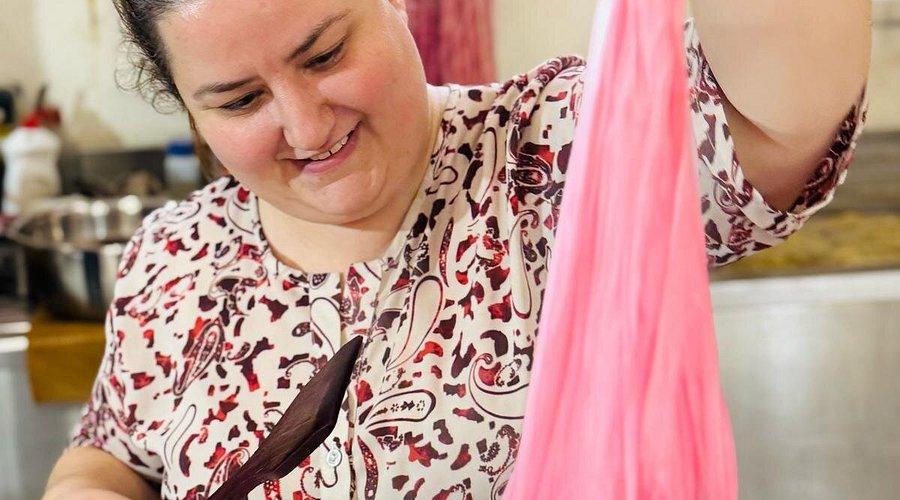
At the Living Color Armenia demonstration at COP17, the first thing visitors saw was the color. They could also look at some of the materials and see yarn being worked at the table. Mariam used a public setting to show the part of the process that is hardest to see in a gallery or in a finished rug: the work that happens between a raw material and the color a weaver can use.
The photographs bring us back to the dye table. The finished carpet will travel farther than the skein or the tray, but the choices made there travel with it. At Woolway’s Natural Dye Studio, visitors can see where those choices begin and how dyeing fits into the wider work of spinning, weaving, and caring for textiles.
